Duck Drop: God loves us, body, spirit, and soul – that is a tremendous challenge
Welcome to the latest Duck Drop blog, a series that we are running in 2026. Each month, TLM International’s communications will focus on a new theme and as a part of that focus, I will be sharing a ‘Duck Drop,’ an opinion piece on the topic at hand. This month we are reflecting on the theme from TLM's recent Day of Prayer: God's love for the whole person, body, spirit, soul.
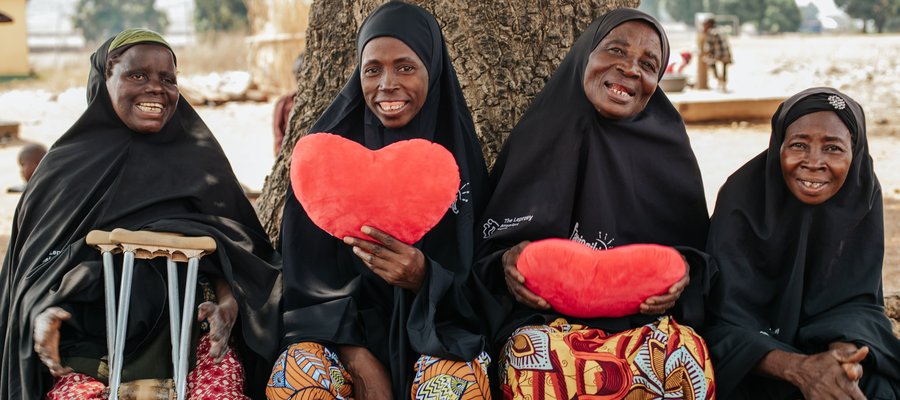
For The Leprosy Mission’s Day of Prayer on 6 May, and throughout this month, we are considering God’s love for the whole person: body, spirit, soul. It is a joy, a solace, and a firm support at your back to know that you were created to be loved by God in such a holistic way. We probably should spend more time each day reflecting on that fact; it would likely do wonders for our mental health.
But that’s not all there is to this theme. There is a bigger challenge behind those words. If God cares for each of us holistically, he expects us to care for each other holistically, as well. Sometimes our focus drifts only to our neighbour’s soul and we forget that God cares for their body and their spirit, too.
Jesus forgave the sins of the paralysed man in Mark 2, but he also healed him. He recognised that fullness of life comes not only with forgiveness, but with health and happiness, too. He practiced that throughout his ministry.
Jesus said, “Very truly I tell you, whoever hears my word and believes him who sent me has eternal life and will not be judged but has crossed over from death to life.” (John 5:24).
But he also said, “For I was hungry and you gave me something to eat, I was thirsty and you gave me something to drink, I was a stranger and you invited me in, I needed clothes and you clothed me, I was sick and you looked after me, I was in prison and you came to visit me… whatever you did for one of the least of these brothers and sisters of mine, you did for me.” (Matthew 25: 35-36, 40)
The Gospel message – and the message of the Day of Prayer – is a taxing one. Because for as long as our neighbour is hungry, thirsty, or facing injustice and we are not taking action, are we living up to Jesus’ call to care for one another? When you live in contexts where people constantly ask you for money, this can be particularly challenging.
Sadly, it is unrealistic for us to meet every need that we see. So how do we show our care for our neighbours in their bodies, spirits, and souls in a way that is realistic? I have three ideas.
- Don’t pass up an opportunity: If you have the opportunity and the means to do something to care for your neighbour, then seize that opportunity. Do it to ensure they are not hungry, that their bodies are not suffering, that they are not lonely. Do it because God made them.
- Trust God, not money: Jesus said “it is easier for a camel to go through the eye of a needle than for someone who is rich to enter the kingdom of God.” (Matthew 19:24). Jesus didn’t define ‘rich’, probably because that term is relative. That being said, this is instructional: if we place our faith in money, our faith is not in God. If we have the means to help others, we should not be shy to do so because our faith is in God and never money. The Leprosy Mission has been blessed for more than 150 years to have received financial support from Christians the world over who have understood that intrinsically.
- Challenge a broken system: I am TLM’s Global Advocacy Lead and so my last idea is, of course, advocacy. We live in a world where the richest 0.001% of the world control three times as much wealth as the entire bottom half of humanity. That equates to 60,000 people vs 4.1bn.
Martin Luther King Jr said, “Philanthropy is commendable, but it must not cause the philanthropist to overlook the circumstances of economic injustice which make philanthropy necessary.” Martin Luther King Jr. (1963). “Strength to Love”. We can give our time and money to help others, but if our world is this unequal, then we cannot overlook the causes of this economic justice, or things will never truly change. It is these systems of injustice and inequality that allow leprosy to continue affecting the poorest in our world.
I would like to see Christians all over the world challenge this status quo with our political and business leaders so that money is distributed more equally. Wouldn’t you rather live in a world where those 60,000 people trusted God more than they did money? Think what that would do for those living in the poorest 50% of the world’s households, what it would do for persons affected by leprosy. So: advocate, speak out, demand change. Add your voice to the churches, campaigning organisations, and community groups who do this already. If you see TLM campaigning on an issue, join us!
Jesus instructs us to pray ‘Your Kingdom Come’. In practice, that means a world where all of us can live with healthy bodies, joyful spirits, and redeemed souls. ‘In practice’ means that we have to practice this. We pray for God’s Kingdom to come, and then we set to work to make it happen. What an incredible privilege, what a tremendous challenge.