Duck Drop: How do we encourage employers to be disability inclusive?
Welcome to the latest Duck Drop blog, a series that we are running in 2026. Each month, TLM International’s communications will focus on a new theme and as a part of that focus, I will be sharing a ‘Duck Drop,’ an opinion piece on the topic at hand. This month we are considering inclusion in the workplace
Mathias Duck is The Leprosy Mission International's Global Advocacy Lead.
God made you and me to be quite different. I am tall, but perhaps you are not. I am a man, but perhaps you are not. I have grown up in South America, but perhaps you have not. All of these things, and many more, make us different. But whilst there may be many differences between us, there is one thing I believe we have in common: God knitted together both of us when we were in our mother’s wombs (Psalm 139:13).
You are who you are not by an accident, but because God has created you and placed you in a time and place to make you who you are today. You and I are not different by accident, but by design.
And so, while my perspective on its own is good, it is more rounded if you share yours too; we get a bigger picture of the diversity of God’s creation. And so, if you and I were to come together in a workplace, we would each bring our distinct perspectives and that would be a blessing. And the more different and disparate perspectives we have amongst our colleagues, the greater the blessing to our work and to each other. This would be by God’s design.
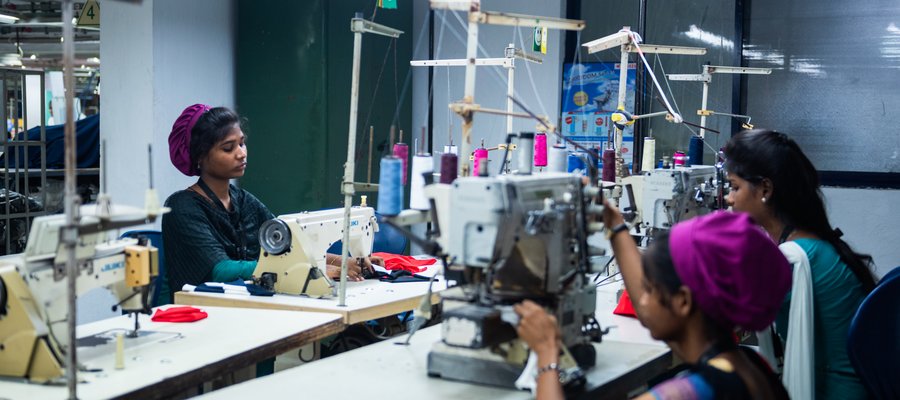
This month at TLM International, we have been talking about the importance of creating space for persons affected by leprosy in the workplace. It can be a good thing for persons affected by leprosy. Compared to jobs that earn a day wage or other areas of the informal economy, organised workplaces can provide a consistent and secure income, as well as greater inclusion within a community. For this reason, I would always like persons affected by leprosy to have these opportunities (even if there are those who, understandably, would not be interested in them).
But my belief is that the blessing will not only be to persons affected by leprosy, but to their workplaces – to their employers and their colleagues. Our workplaces are painted in deeper shades of grey when any group of people is excluded from them. Workplaces where people are excluded are workplaces of fear (what if I’m next?), workplaces that lack freedom (what if my perspective isn’t valued?), and workplaces that miss out on insight and creativity (we don’t know about this issue, so we can’t engage).
When I picture my ideal workplace, I picture freedom, insight and creativity. Don’t we all?
Persons affected by leprosy and other disabilities can struggle to access workplaces because of stigma and bad attitudes, as well as fears over the financial and practical hurdles of adapting a workplace to ensure a person with disabilities can thrive - what we call ‘reasonable accommodations’.
When we advocate with employers to overcome these hurdles, we can refer to international human rights law, which protects the rights of persons with disabilities to work on an equal basis with others (Article 27, CRPD). But I would rather start by telling them a story of workplaces where everyone has opportunities and by modelling such a workplace within our own organisations; workplaces defined by freedom and creativity over fear and exclusivity, where all perspectives are welcome and can contribute.
If we see a world designed by God to be diverse, should our workplaces not reflect that too?