Duck Drop: What can we do to hear the voices of children affected by leprosy?
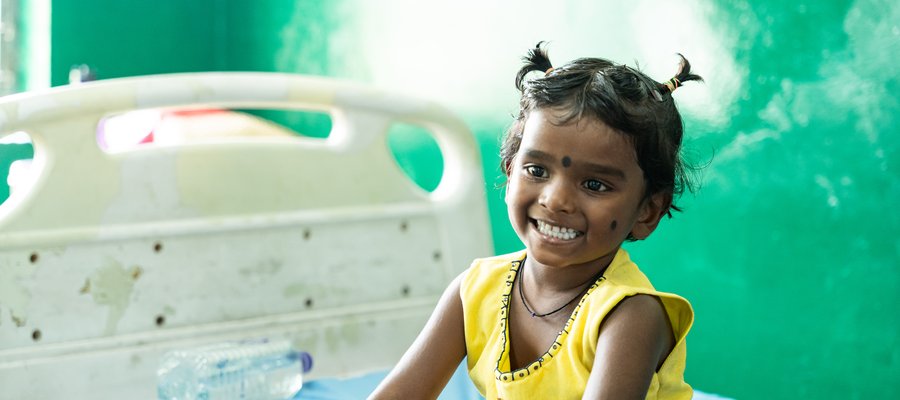
Throughout 2026, I have been publishing a monthly opinion piece reflecting on the themes that our communications teams have been considering this year. For the final Duck Drop blog, we are focusing on the voices of children affected by leprosy.
How often have you heard of a child affected by leprosy engaging in advocacy? It doesn’t have to be advocacy with senior government officials, it could be very small-scale advocacy with local decision-makers or with leprosy NGOs. It’s very rare.
My friend and leader of IDEA Nepal, Dinesh Basnet, recently told us, ‘In Nepal, children are seen as not being competent enough to give any suggestions or ideas and so they are undermined.’ Perhaps this is why children are under-represented in our work, but perhaps it is also because we don’t know how to meaningfully engage children in advocacy. There are no organisations in the leprosy sector who specialise in working with children, so I think this is a good opportunity to look outside of our sector and see what we can learn from others.
For my last Duck Drop of 2026, we have reached out to ERIKS, who are The Leprosy Mission’s partners through the EU-CORD network. They are specialists in engaging children in advocacy and they have a few tips to share with us. Below are some insights we have gathered from talking to Daniel Gleisner, who is a member of the advocacy team at ERIKS. I hope these are lessons we can take to heart at The Leprosy Mission.
Adults should not guess at children’s opinions
It is easy for adults – especially parents – to assume they understand a child’s opinions and can speak for them, but that is a mistake. In recent months, ERIKS have been working with children in Moldova to hear their thoughts on a proposed law banning social media. Many adults in Moldova saw social networks as being just “fun”, but for kids, they are a tool for learning and development. They did not want to lose this resource, instead the children wanted digital education to help them navigate the online world safely. The first tip for anyone engaging children in advocacy is to not to assume parents can speak for children and to enter into discussions with preconceived notions about what is best for children. Hear their opinions directly wherever possible and with a little bias as possible.
Frame issues so kids can find simple solutions to issues
It is not reasonable to expect children to weigh in on complex issues. A child might not be able to speak to how governments should fund active case finding, but that doesn’t mean that they have nothing to say about active case finding. What matters is how you frame the question: if someone was going to check you for leprosy, where would you want that to happen? Would you be worried to be diagnosed with leprosy at a school screening camp? Would you want a parent with you? Would you want the diagnosis to be kept secret from others at the school?
Once a child understands the question they are being asked and sees how important it is, they can have a big influence. In Bangladesh, ERIKS worked with a group of kids who saw an issue come up again and again: the children’s centre sat right beside the local road that connects the village to the main road. However, because the road was made of mud and sat much lower than the main road, rainwater easily pooled on the surface. During the rainy season, the muddy, waterlogged path became slippery and difficult to cross, making it a daily struggle for the children just to reach their centre and for the village to access the main road. It was the children who encountered the problem most often and it was they who brought the issue up and lobbied for it so that everyone in the community saw how it was impacting not just the kids but the whole village. Today, a sturdy brick road runs right beside the children’s centre. If you boil things down to simple issues, even young kids can help to find simple solutions.
Discover who children have influence over
Advocacy is about having influence over decisions and decisionmakers. As Dinesh pointed out, many people dismiss children, but it is lazy to assume children have no influence. Instead, think carefully about who children can influence. Their parents, siblings, grandparents, teachers, and religious leaders all have relationships with the children and care about their wellbeing. Children have influence and they should be given the opportunity for their voices to be heard by these people, even if it means a third party like The Leprosy Mission or ERIKS facilitating that opportunity.
In Bangladesh, dengue has become a major problem. In one community in Bangladesh that has been particularly affected by the outbreak, children in ERIKS projects were growing concerned as their neighbours fell sick and their schools emptied out. The children responded to this by holding meetings with their caregivers, their schools, and the leaders at the children’s centres. During the meetings, the children spoke openly about the importance of keeping their environment clean. They explained to the adults how Aedes mosquitoes breed in clean, stagnant water collected in flower pots, broken containers, discarded tires, and open yards around their houses. They emphasised that raising awareness about dengue is essential to keep their entire community safe, and that prevention starts in every household. Together with those listening, the kids began to work on these causal factors and even the local government recognised these efforts and stepped in to provide mosquito-control medicine to spray in the kids’ learning spaces.
These are only three little lessons, but I hope they have given you some inspiration to consider how children affected by leprosy could be engaged and how their voices could be heard so that their courage and hope is built. We have a lot that we could improve in our sector when it comes to engaging children so my question as we come to the end of the year is: could you consider what progress you might make in your work to hear from children affected by leprosy in 2027?