Duck Drop: How can we hear the voices of older persons in our work?
Welcome to the latest Duck Drop blog, a series that we are running in 2026. Each month, TLM International’s communications will focus on a new theme and as a part of that focus, I will be sharing a ‘Duck Drop,’ an opinion piece on the topic at hand. This month we are reflecting on older persons as we lead up to the International Day of Older Persons on 1 October.
This month, ahead of the International Day of Older Persons on 1 October, we have been considering the specific experiences and needs of older persons affected by leprosy. In my role as TLM’s Global Advocacy Lead, it has made me wonder whether we do enough to hear their voices and ensure they are represented in our work and through our advocacy.
The challenges that older persons face are distinct from other age groups. We see that ulcer healing takes longer, that there can be other age-related illnesses, like hypertension, arthritis and diabetes. Mobility can decrease and isolation becomes more common. Studies show that such loneliness is also linked to a 25% increased risk of dementia.
If family support is lacking, then a person may be having to manage alone amidst illness, physical and cognitive decline, and systems that have moved on very quickly in recent years. In some of the communities we support, it is also true that many older persons will not have benefited from the same levels of education that younger generations have. If family are unable to provide financial support, they may also be living in poverty. In these situations, you can understand that depression and anxiety would be a risk, also.
Lucrecia Vasquez is my colleague on TLM’s Advocacy Working Group and is the leader of an Organisation of Persons Affected by Leprosy in Colombia. In this video, she expresses the challenges well,
“Some cannot read or write. Others lack family support… Older people are not always treated well in healthcare settings if they arrive in dirty clothes or don’t speak ‘properly’, or don’t smell pleasant. Doctors can fail to recognise that this is an older person who does not have family support and is having to manage alone.”
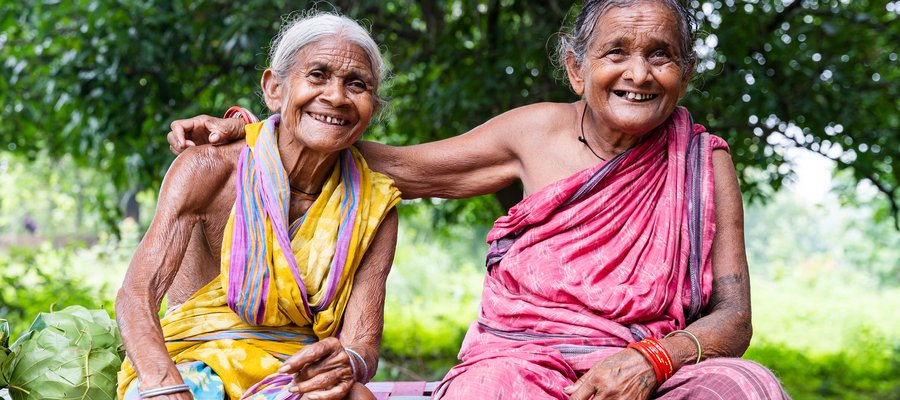
This is a group of people who are facing significant challenges, and it is a group who it is very easy to overlook. They may be isolated in their homes, not engaging in community, and having difficulties in communicating with the NGO workers who might arrive. They are too often suffering in the shadows.
The question I am asking myself is, what role can we play in moving people out of the shadows and hearing their voices? How could older persons speak directly or indirectly to policymakers? How could their thoughts be reflected in our programmatic decisions?
Dr Jacob from our DR Congo team suggests that one solution is to conduct age sensitive assessments to understand how many older persons affected by leprosy we have in our projects. That’s a good start.
But if we are going to make the most of hearing from older persons, we may need to adapt our approach to meet people where they need to be met. Here are 5 tips from experts in ageing which we can keep in mind as we seek to listen to older persons affected by leprosy and create space for their voices in our programmes and advocacy.
1. Multiple co-morbidities
An older person with leprosy is likely to have other long-term health conditions that impact on their experience of leprosy and the treatments they can receive. This might include conditions that affect mobility, making attending public events in inaccessible places difficult. It might include conditions, like arthritis, where there is pain alongside mobility problems. They may have had strokes which can affect ability to speak. 'Frail' older people (there is diagnostic criteria for frailty) are living with multiple long-term conditions and fatigue, with reduced capacity to recover from illness and injury. For these persons, energy levels are limited, so communication with them at times of day when they are most alert, and not over-tiring them, is essential.
2. Stigma
Ageism as a factor in older people's voices not being heard, and in their lack of confidence putting their view across; ageism is even apparent in adverse experiences of healthcare, with older people not offered treatments (even pain relief), which younger adults might receive, on the basis that they have already lived a long time. Dementia is also becoming an increasingly significant issue in the Global South, but attitudes to it can be stigmatising. The same is true with mental health; as well as those with enduring mental health needs, many older people face anxiety and depression linked with multiple losses in their lives. The message here is to communicate in ways that overcome the low self-esteem that can be associated with being older and living with dementia or mental health conditions
3. Access
It may be that older persons with leprosy have lower educational levels and literacy, so overcoming difficulties with written guidance might be needed. They are more likely also to be digitally excluded, so communicating with them in other ways, or helping them get online, is vital. For those with dementia, we can adapt how we speak (slower, clearer, shorter sentences, avoiding complex terminology, and allowing pauses for the person to process what we say; avoiding too many closed questions which create pressure to respond). We can also use multisensory ways to communicate, and non-verbal strategies.
4. Working with families
The extended family is the main source of support for older people in countries that lack a developed welfare state. Involving a primary family carer in conversations, while also allowing the older person to speak themselves, is helpful, while remembering that abuse can happen in families. There may be some strain on the family in caring for an older person, juggling caring with many other roles and responsibilities. It may be seen as a duty to care for an older family member, and can be rewarding in giving back to someone who has nurtured you, but can also be stressful.
5. Vulnerability to abuse
As a result of physical frailty, sensory loss and cognitive decline, among other things, older people are vulnerable to elder abuse. This might be abuse by a family member or someone who visits the home, and might include financial abuse but also physical, sexual and emotional abuse to which they can fall victim as they are less able to defend themselves. Safeguarding vulnerable older persons with leprosy is important, being vigilant and responding to signs of abuse.
To mark this International Day of Older Persons on 1 October, could you consider how older persons might be better included through your work and how you could better hear their perspectives? It might not always be an easy process, but I think it is one that reflects our Christ-centred mission very well.