Duck Drop: Do we need the WHO and the UN?
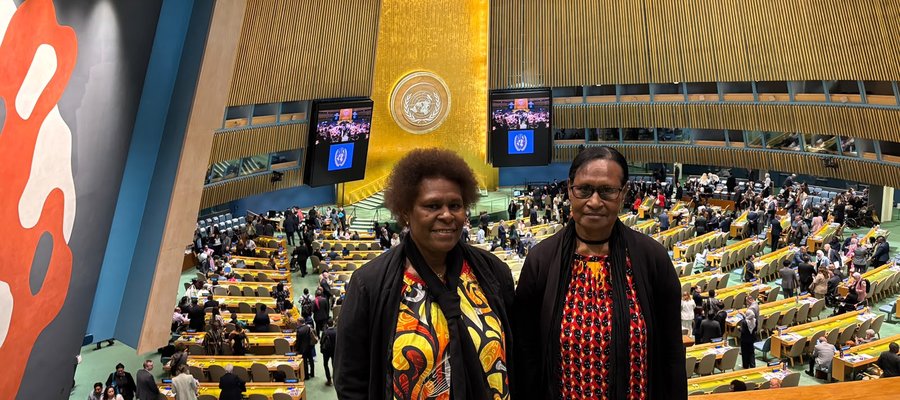
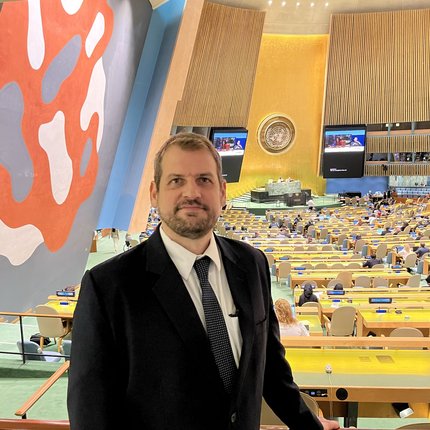
Welcome to the latest Duck Drop blog, a series that we are running in 2026. Each month, TLM International’s communications will focus on a new theme and as a part of that focus, I will be sharing a ‘Duck Drop,’ an opinion piece on the topic at hand. This month we are reflecting on the implications of the UN and the WHO funding uncertainties, and how these international organisations are vital to the fight against leprosy.
The United Nations and World Health Organization became cornerstones of post-war global order, established in the immediate aftermath of 1945 to help the world reset after two devastating global wars. As much as our world feels uncertain today, I can only imagine how uncertain it felt in that period and how important it was to rebuild trust and open new lines of communication between nations.
Today, these institutions are facing their biggest threat yet. Both organisations are undergoing a major funding crisis prompted by a reduction of funding from nations worldwide, but led by the US, which has totally withdrawn from WHO and drastically reduced their commitments to the UN. Trust in these two organisations is diminishing as concerns over national sovereignty dominate conversations at a domestic level, replacing interest in what we call multilateralism (the UN defines this word as, ‘international politics and diplomacy, where many countries with different views and goals work together’).
So our question for you this month is this: do we need the UN and WHO? More specifically, do we need them in the leprosy world? The answer is that we cannot and will not achieve our zero leprosy goals without them. Let’s look at why.
We achieve little without communication
Imagine your football team is playing in the cup final. They are one goal up with 10 minutes left in the match. As a fan, you would be very concerned if the players did not say a word to each other in those ten minutes. If they do not communicate, they will not be coordinated, they will not see and move to address threats or seize on opportunities, and it would be very straightforward for the opposition to find a way to score. Your team would not be lifting that trophy.
Whether we like it or not, our world is a team. We all face the same threats, whether the climate crisis, pandemics, conflict, or the rapid emergence of world-altering tech like AI. How are we supposed to address these threats if we do not communicate with one another? These are global problems that require global solutions. If we had not communicated during the pandemic, if we had not been led by the WHO, how many more people would have died? If AI or the climate crisis are to change our daily lives fundamentally, how can we be sure that we will be safe if our leaders do not coordinate their response? These issues will not respect our borders, so we cannot pretend our country can handle them alone.
All of this is also true of leprosy. We need medication to arrive in patients’ hands. We need clear guidance for how to prevent and treat the disease. We need to know where the disease has spread and whether the number of cases is growing or reducing. All of these things require us to coordinate with one another at a global level. When we do this, we have more knowledge and are better equipped to end leprosy and transform lives. This is true of all diseases, and it is true that all nations benefit from this.
Our world has never been more global, so now would be the worst time to stop communicating. The reality is that if we don’t share knowledge and coordinate, then leprosy will not be stopped in our lifetime or anyone else’s. Without the UN and WHO, our communication and coordination will falter almost to the point of collapse.
Accountability for your sake
As I see it, another reason we need these organisations is because they allow us to hold one another accountable. Perhaps defenders of national sovereignty will take exception to this point, but I think it is important to note that the UN and WHO have no power to force legislation on a country. If your country is in a position to be held accountable at the UN, it is because your elected officials – your parliament or congress – chose to ratify UN conventions. This decision was made with complete national sovereignty, and likely with the intention of putting safeguards in place to protect you as citizens from present or future governments and from malicious actors in the private sector or elsewhere.
Many people who are sceptical of globalisation feel this way because they have been let down and left behind by the process. They are right to feel this way; it was never inevitable that they would be left behind. However, the safeguards created by UN conventions can protect ordinary citizens from the effects of globalisation or from actors who would seek to harm them.
Take the Convention on the Rights of Persons with Disabilities, for example. Around 16% of us worldwide are persons with disabilities (something we know thanks to WHO data) and this Convention is designed to protect these persons from many injustices, including a government that would limit their liberty of movement (see Article 18).
Alternatively, consider the Convention on the Elimination of Discrimination Against Women. This Convention outlines and protects the rights of women who might face discrimination from their employer. (see Article 11).
These are UN Conventions, but they have been ratified and implemented by your elected officials in order to protect your rights now and in the future. Your government must answer to other governments, proving that your rights are being protected. They can also return the favour, ensuring that other governments are protecting their own citizens’ rights.
And, of course, this also applies to persons affected by leprosy. Because of the discrimination and stigma that surrounds leprosy, it is all too common for us to find that our rights are neglected, that we might be denied employment, education, or healthcare because of discriminatory attitudes. There is also legislation in countries across the world that discriminates explicitly against us because we have, at some point in our lives, received a leprosy diagnosis.
We can speak to our governments about these issues, but without the UN Conventions that have been ratified in our countries, our legal arguments have the potential to crumble. And suppose our government does not want to listen to us? It is through the UN that we can have our voice heard. That is something I have seen many times as someone working in global advocacy: citizens whose voices are ignored in their own communities, and countries often find that the place for their voice to be heard is at the international level. Speaking on behalf of a group of people whose voices are often ignored even within their own families, I cannot begin to tell you how powerful that is.
So do we need the UN and WHO?
There are many threats in our world today, and although it might not feel as uncertain as the 1940s, there are still many reasons to worry. Amidst these worries, it is understandable that our instinct is to retreat and protect our own nations, but it is an instinct that will not serve our needs in the long term.
We face too many challenges – like leprosy – that are global challenges, requiring coordinated, global responses. We need to communicate, gather knowledge, and share it together. We cannot do that effectively without a central organising body.
We also see global trends towards authoritarian government and global businesses that value profits far more than they value personal or community wellbeing. In the face of these trends, individual rights are under threat. Without accountability and globally recognised human rights frameworks, we will allow far too much suffering. If we remove them, persons affected by leprosy lose significant weapons in the arsenal they use to defend their human rights.
Of course, these institutions are not perfect – no institution ever has been – but our world is a team and without these institutions, we cannot respond to the threats or opportunities facing us. If you see ways to improve them then great, so do I. Bring those to the table. But right now, the best option is not to withdraw, but to lean in. It will serve everyone’s best interests in the long run, including persons affected by leprosy.