Kedir's Journey to Stability and Independence
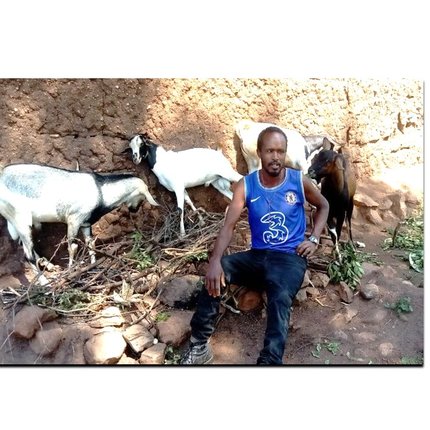
Kedir is a 41-year-old father of three from the Adu Bate Kebele leprosy community in East Hararghe's Haramaya Woreda in Ethiopia. His leprosy related disability, including impairment of vision in one eye, worsened the harsh realities of poverty and exclusion he faced. With no assets and solely dependent on sporadic, low-paying daily labour, Kedir found it challenging to secure basic necessities for his family. “I live under severe poverty and can’t afford a goat,” he had once expressed, highlighting his limited means and lack of access to sustainable income opportunities.
Recognising the profound need to empower individuals like Kedir to live a productive life of dignity, the Ethiopian National Association of People Affected by Leprosy (ENAPAL), a committed partner within the We Are Able (WAA) Project, launched a goat-rearing income-generating group. The initiative was suggested by the locals as the geography and climatic condition are ideal for this, and it is also suitable for people with disability.
Climate and geographic conditions, the importance of livestock
This initiative aligns with the WAA project’s broader objective of fostering economic resilience, inclusivity, and sustainable livelihoods for Persons with Disabilities through tailored income-generating activities.
Livestock businesses are one of the highest income generators within Ethiopia’s economic landscape. Goat farming specifically, is a lucrative, long-term investment. It can produce a steady income over a person’s lifetime. Just two goats, male and female, could quickly turn into a folk within a few years. These goats can then be used for meat, milk production and even bought and sold when necessary. Goats have a low-risk of developing or catching diseases and have high-local demand. East Haraghe was deemed ecologically viable for successful goat rearing and herding as part of the project research findings.
Path to Transformation: Training and Support
Through strategic collaboration with local government office for agriculture and animal husbandry, and community leaders, ENAPAL identified the most vulnerable community members and provided them with essential skills in goat-rearing and animal husbandry. Kedir received practical training in animal husbandry and was provided with a pair of goats to initiate his livestock venture. Kedir’s involvement with the WAA project has provided him with consistent guidance from the woreda agriculture office, ensuring his goats receive the best care.
This has fostered in him a sense of ownership and purpose.
Today, Kedir is a proud owner of 5 goats and is eagerly anticipating the birth of more goats. Goat rearing is a regenerative process and enables self-sufficiency, reliance against economic burdens and supports a sustainable career.
He is now an established and well-respected member of his community, remaining connected with project staff and other community members who have been supported by the WAA project. His business now supports his family and has enabled him to send his children to school, supporting their future. This business has given Kedir a sense of purpose, belonging and most of all, a reason to be proud.
Impact Beyond Income: A Story of Community Respect and Family Stability
Beyond the economic gains, Kedir's story speaks to the social transformation the WAA project fosters. Through the knowledge and skills he has gained, his commitment and resultant success, Kedir has gained newfound respect within his community and set a positive example for others facing similar challenges. He continues to work with the project network and other members who have undergone training and practice goat rearing.