Rekha is the living proof that you can always stitch your life back together
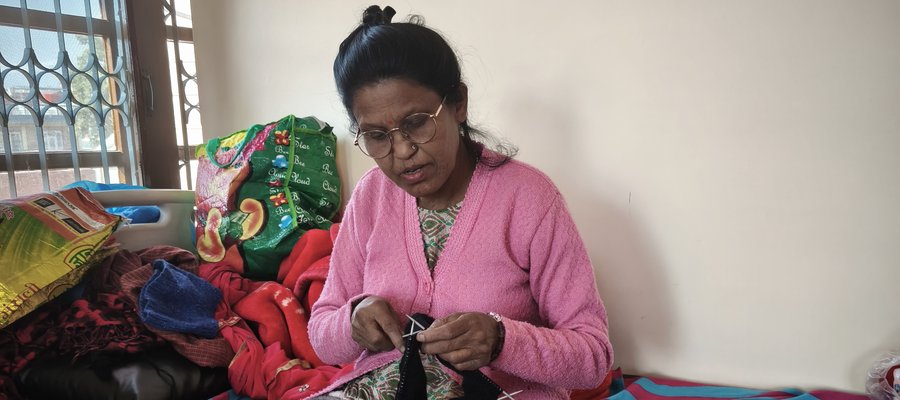
In Nepal, Rekha, now 55 years old, has been affected by leprosy since she was around seven years old. At the time, however, no one understood what her symptoms meant, and she did not receive an official diagnosis until she was almost twelve years old.
Rhekha’s mother died when she was two years old, and when she was diagnosed, she was living with her father and stepmother who already resented her because she was a stepchild. The diagnosis only added to this prejudice. She vividly recalls her stepmother telling her to “stay away,” and her father telling her to go somewhere far away and be gone for good. She was forced to keep her belongings separate from her siblings, and often she was beaten and denied food.
Her maternal uncle and his family, however, lived nearby and visited frequently to provide emotional and financial support. Indeed, over the next several years, her uncle paid for all of her leprosy medications and made sure that she received proper treatments. Although it was a deeply painful time, her uncle helped her to hold onto hope.
Partially due to the discrimination and stigma that Rekha faced throughout her childhood, she decided not to get married, and instead turned her focus towards advocacy and raising awareness of leprosy in her community. Throughout her teenage years, she used her talents in singing and dancing to participate in cultural events and build connections with local leaders, and through a local Self-Help Group, she became aware of her rights and of government services that could facilitate personal and community-wide development. She became a confident voice for people affected by leprosy and disability, fighting stigma and promoting early diagnosis.
“I have learned to make caps, hair bands, gloves, and sweaters,” she said, “I have already sold some of them. Maybe I can turn this into a business.”
During this time, Rekha was living independently, farming and rearing cattle. One day, however, one of her cows stepped on her leg and the injury caused a small ulcer. Hoping the wound would heal on its own, she did not seek immediate medical care, and soon after, her father passed away and she became preoccupied with funeral arrangements. By the time she finally reached the hospital, treatment had been delayed for so long that amputation was unavoidable.
This amputation has left Rekha full of concerns about her future. She is now unable to continue tending her farm, and has no one to support her financially. She is also worried that with her prosthetic foot, people will no longer respect and listen to her as they did before.
Despite these fears, however, Rekha keeps holding onto hope. While she was at the hospital recovering from her amputation, she learned skills such as knitting and jewellery making, which allow her to make a small income without walking long distances or engaging in heavy labour. “I have learned to make caps, hair bands, gloves, and sweaters,” she said, “I have already sold some of them. Maybe I can turn this into a business.”
Indeed, although she still has questions and fears, Rekha stays determined and does not want to be idle. Despite the setbacks she has encountered, she continues to work hard not only to support herself, but also to raise her voice for others affected by leprosy and disability.